


Using different techniques
BATIK, MACRAME, FELTING, MOSAIC, GLASS PAINTING…
and materials,
WAX, WOOD, WOOL, BEAD, GLASS, STONE, PAINTS, FABRIC…
We combine traditional, culturally rooted craft techniques with simple, intuitive making creating various useful and beautiful objects to take home. Some processes are more detailed, others light and playful – and you are free to choose your own rhythm.
Creativity is not about complexity, but about presence and joy.
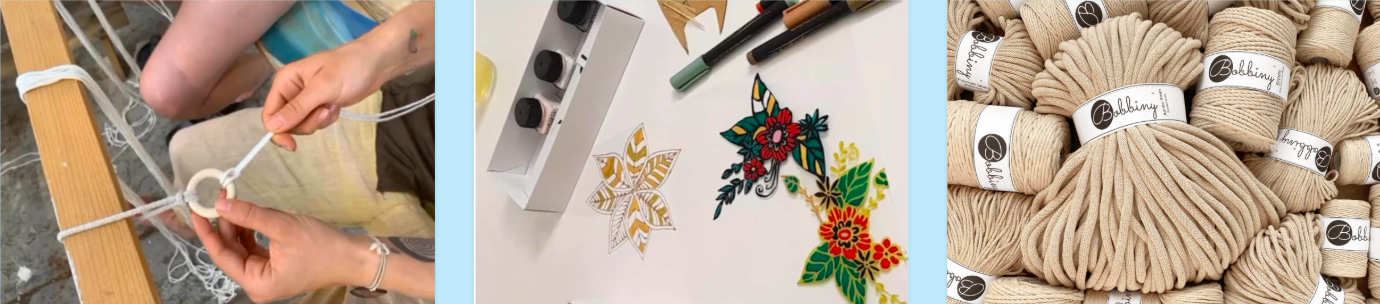
ABOUT TECHNIQUES:
BATIK
is a traditional textile art that uses wax-resist dyeing to create intricate patterns on fabric. The word batik comes from the Javanese word “ambatik”, meaning “to write with wax.” Wax is applied on cloth with tjanting tool or stamps made from sponge. Multiple colors are achieved by repeated waxing and dyeing. Batik has been practiced for centuries, with early evidence from Indonesia, especially Java, dating back to at least the 6th–9th centuries. Over time, batik techniques spread to Malaysia, Thailand, India, Africa, and even parts of the Middle East. Each region developed its distinct styles and motifs. Patterns are often symbolic – floral, geometric, nature-inspired, or reflecting social status and the textiles are used for everyday clothing, ceremonial wear, weddings, and cultural festivals, traditional garments (sarongs, kebayas, shirts), modern fashion (dresses, scarves, accessories) or decorative objects (lamps, wall hangings, tablecloths, cushion covers).


MACRAME
is a textile art made by knotting cords by hand, without needles, hooks, or looms to create various items. Materials traditionally used are cotton, linen, hemp, jute, wool, and today also recycled and natural fibers – reflecting macramé’s close relationship with nature and sustainability. The word macramé comes from the Arabic “migramah”, meaning fringe or ornamental edging. Macramé dates back to at least the 13th century, when Arab weavers used decorative knots to finish the edges of woven textiles. Through trade routes and maritime travel, the technique spread across North Africa, the Middle East, and Europe. Sailors played a key role in sharing macramé, knotting items during long voyages and trading them in ports. This ancient art form has evolved over thousands of years, originating from primitive knotting techniques used for functional purposes such as lashing rafts and crafting fishing nets to creating many beautiful and useful object. Macramé saw a major revival during the 1970s, linked to handmade culture and natural living – and has returned strongly today with the rise of slow craft and sustainable design. It is used for home décor (wall hangings, plant hangers, curtains, table runners), fashion & accessories (belts, bags, jewelry, sandals), functional objects (Hammocks, nets, baskets) and often as a meditative, slow-making process, encouraging focus, relaxation, and connection through repetitive handwork.


FELTING
is one of the oldest textile techniques in the world, created long before weaving or knitting. It is made by matting and compressing wool fibers using moisture, heat, and movement. Primarily sheep’s wool is used, but also alpaca, merino, camel, and other animal fibers – chosen for their natural warmth, resilience, and sustainability. Felting dates back over 6,000 years and is closely linked to nomadic cultures of Central Asia, including Mongolia, Siberia, and Anatolia. Sheep’s wool was abundant and durable, making felt essential for daily life. Ancient civilizations used felt for clothing, footwear, blankets, rugs, coverings and shelter. Felted yurts (tents) are still used today by nomadic communities. Through migration and trade routes, felting spread across Asia, the Middle East, and Europe, with each region developing its own techniques and patterns.
Dry felting, or needle felting, is the process of punching rolls of felt with a needle until the wool is pulled into itself. With this technique, you can form sculptures, art pieces, home décor, accessories, toys, and fashion.


GLASS PAINTING
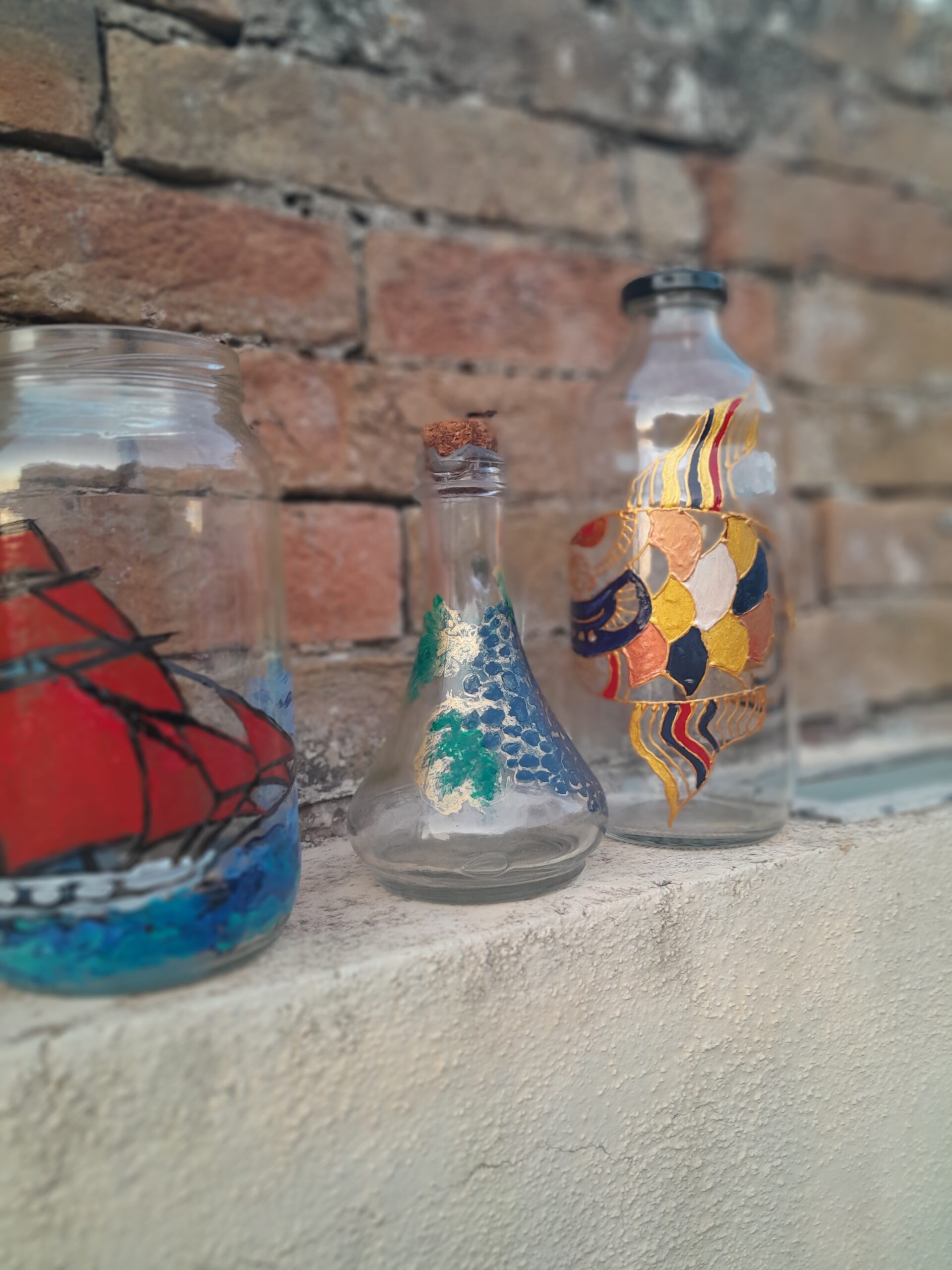
is a timeless art form that has been around for centuries used for decorative and symbolic purposes. Early examples can be traced back to Ancient Egypt and Rome, where glass objects were painted for temples and wealthy homes. It became especially popular during the medieval period, particularly in churches and cathedrals. During the Renaissance, techniques improved, allowing for more detailed figures and realistic designs. Stained glass windows were used to tell biblical stories to people who could not read. Over time, it evolved from simple decoration into a refined artistic practice. It is commonly seen in windows, doors, mirrors, lamps, bottles, and wall hangings. In religious spaces, it adds spiritual meaning and dramatic lighting effects. It involves applying paint to glass surfaces to create beautiful, intricate designs and patterns. There are several techniques used in glass painting depending on the style and purpose. Common methods include stained glass, reverse glass painting, and painted glass using special glass colors. Outlines are often drawn first using liners, followed by filling in colors carefully. Some techniques require heat or firing to make the design permanent.


MOSAIC
is a pattern or image made of small regular or irregular pieces of colored stone, glass or ceramic, held in place by plaster and covering a surface. Mosaic art originated in ancient Mesopotamia, where small pieces of stone and clay were used to decorate buildings. Early mosaics were mainly used for floors and walls in public buildings and homes. It later reached great artistic importance in Ancient Greece and Rome, becoming more detailed and artistic. They were commonly used in churches, palaces, and public spaces to show religious scenes and daily life. Byzantine mosaics are famous for their gold backgrounds and spiritual themes. In traditional mosaics, gold or silver glass was used to add brightness and richness. Over time, mosaics evolved into both fine art and decorative craft. Mosaics are made using small pieces called tesserae, which can be created from many materials. Common materials include colored glass, ceramic tiles, natural stones, marble, and pebbles. Modern mosaics may also include shells, beads, mirror pieces, or recycled materials. Different types of glue are used depending on where the mosaic will be placed. White craft glue or tile adhesive is commonly used for indoor mosaic projects. For outdoor or wet areas, cement-based mortar or waterproof adhesive is preferred. After gluing, grout is applied between the pieces to hold them firmly and finish the design. Mosaic art is popular in both indoor and outdoor spaces because it is strong and long-lasting. Mosaics are often seen in religious buildings, gardens, fountains and public monuments. Today, they are also used in modern art and home décor. Making a mosaic out of glass, ceramic or stone is extremely enjoyable.


ARTS & CRAFTS
RETREAT
(8 days / 31.5. – 7.6.2026 / guided daily crafting)
1100 € per person

CLICK FOR MORE!
located in the remote Stoncica bay
– Sea side accommodation
for more info contact +385976711552 (wapp, viber)
/ No experience needed /
CREATIVE DROP-IN
WORKSHOPS
(daily / July–August / 2–3-hour guided sessions)
30 € per session
CLICK FOR MORE!
located in the old town of Vis (Kut),
in an open-air sea view garden
/ Music and refreshments included / Materials provided / No experience needed /